
- Oldsmar, FL
- (727) 569-5280
- info@waterdamageoldsmar.com
Why Mold Spreads Fast After Water Damage in Oldsmar, FL
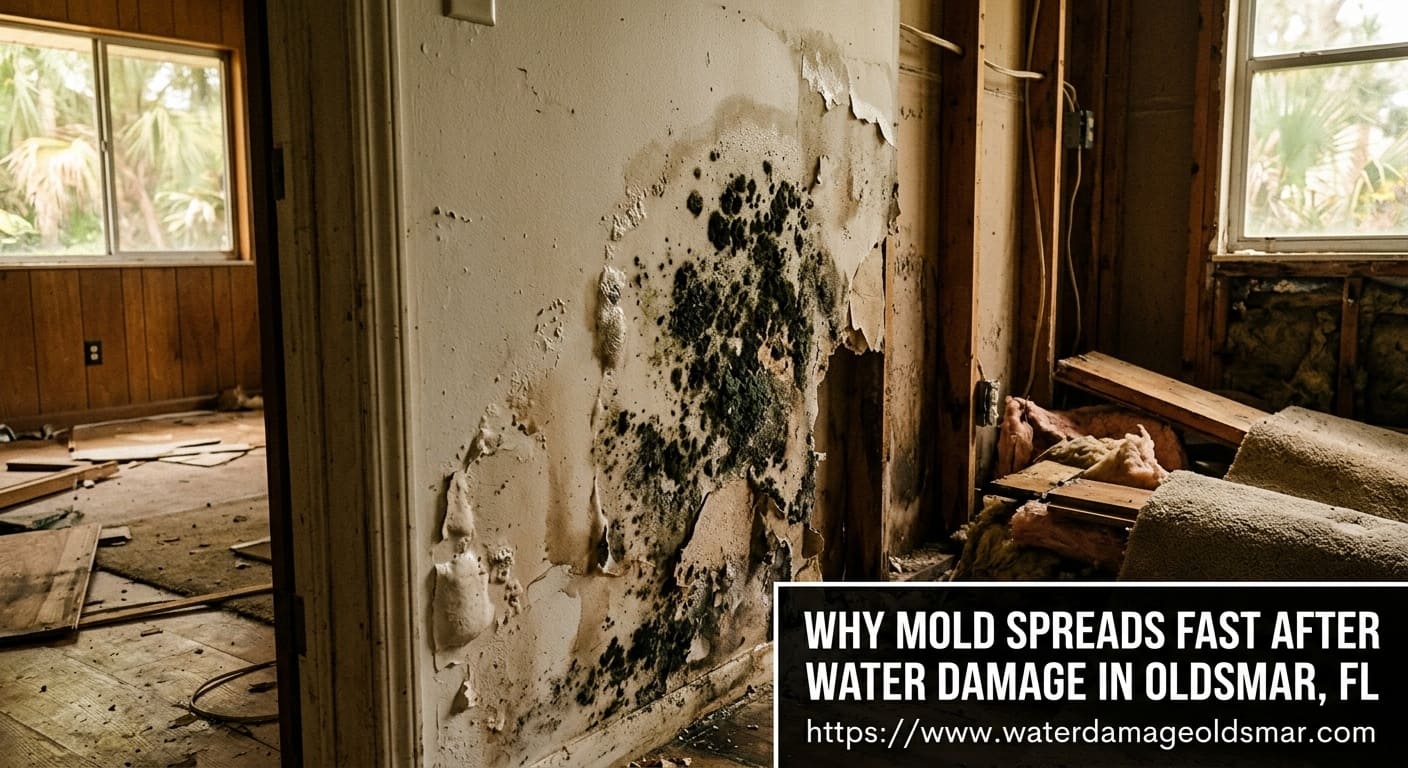
Why Mold Spreads Fast After Water Damage in Oldsmar, FL
Oldsmar, FL homeowners often think the emergency is over once carpets feel dry to the touch. In our warm Tampa Bay climate, that is frequently when mold problems begin. High indoor humidity plus leftover moisture in wall cavities, toe kicks, and insulation creates ideal growth conditions within a day or two of a leak, flood, or condensate overflow.
Mold needs moisture, a food source like drywall paper or wood, and time. Oldsmar supplies the first ingredient for much of the year. After a water event, the clock starts whether the water came from a supply line, an overflowing dishwasher, a roof leak, or storm water under a garage door.
This August 2026 guide explains why mold spreads quickly after water damage here, where growth hides, and when to bring in professional mold remediation in Oldsmar, FL. If water is still active in the home, start with emergency water damage response first.
Why Mold Moves Fast in Oldsmar
Surface drying is not the same as structural drying. Vinyl plank and tile can look fine while plywood or concrete underneath stays wet. Drywall paper faces can grow mold behind paint. Insulation traps moisture against exterior walls. Guest bathrooms and closets with weak airflow become quiet incubators during humid summers across Pinellas County.
Outdoor dew points stay high for long stretches. When doors open after a storm or during repairs, humid air enters and AC coils work harder. That moisture load makes incomplete drying worse. A room that would stabilize in a drier climate can keep feeding microbial growth for days here.
Indoor leaks are just as common. Washing machine hoses, water heaters, ice maker lines, and toilet supply valves fail without warning. Because many Oldsmar homes have slab floors and open living areas, water can travel farther than people expect before anyone notices. By the time a homeowner finds the wet spot, adjacent cavities may already be damp enough for growth.
The 24 to 72 Hour Window After a Leak
In warm humid conditions, many organic materials can begin supporting mold within 24 to 48 hours. That does not mean every wet surface becomes a major remediation job overnight, but it does mean waiting through a long weekend is risky.
Hour one to hour twelve should focus on stopping the source and removing standing water. Hour twelve to hour forty eight should focus on structural drying with the right equipment. After seventy two hours, homes that still smell musty or show soft drywall usually need more aggressive opening of cavities and a formal mold assessment.
This timing is why Water Damage Oldsmar, FL treats drying and mold prevention as one process. Call (727) 569-5280 early if you are unsure whether the house is truly dry.
Common Places Homeowners Miss
Behind baseboards and under cabinets
Water wicked into toe kicks and baseboard cavities often stays long after floors feel dry. Soft trim, dark lines at the floor edge, or a musty smell when you open lower cabinets are classic warning signs after a supply line or appliance leak in Oldsmar homes.
Inside wall cavities
Moisture meters and infrared cameras help technicians find wet studs without tearing every wall open. Peeling paint, soft drywall, or dusty looking growth near outlets deserve attention. Do not sand suspected mold dry. That spreads spores through the house.
HVAC systems and drip pans
Air conditioning runs hard for months here. Clogged condensate lines and dirty drip pans introduce moisture into mechanical closets. After a flood, ducts that sat in humid air can move musty odors room to room. Restoration should include checking the mechanical system, not only the wet floor.
Closets, spare rooms, and behind furniture
Low airflow rooms grow problems quietly. A guest closet against an exterior wall, a bed pushed tightly against damp drywall, or stacked boxes on a wet garage slab can hide growth until belongings are moved weeks later.
Early Warning Signs After Water Damage
- Persistent musty smell in one room or closet
- Allergy like symptoms that improve when you leave the house
- Warped trim, soft drywall, or bubbling paint
- Condensation that never improves with normal AC use
- Dark spotting on grout, caulk, or the back of furniture against wet walls
- Flooring that feels springy or shows dark edges at baseboards
- Recurring stains that return after painting
None of these alone prove mold, but together after a water event they justify a professional inspection. Waiting through another humid week usually makes removal more invasive and more expensive for Oldsmar, FL homeowners.
What Not to Do
Do not paint over stains hoping they disappear. Do not treat ozone machines as a substitute for removing wet materials. Do not bag large amounts of moldy drywall without containment. Bleach on porous surfaces rarely solves Florida mold problems because growth sits inside the material. Proper remediation removes the food source and corrects the moisture.
Also avoid running random fans across a moldy wall for days. That can move spores into other spaces. If you can see growth larger than a small isolated patch, or if the water source was dirty, call professionals before aggressive DIY cleaning.
How Professional Mold Remediation Works Locally
Assess and contain
Water Damage Oldsmar, FL starts with moisture mapping and visual assessment. Work zones are contained so dust and spores do not travel. Negative air with HEPA filtration protects the rest of the home during removal. We also identify the moisture source, because remediating without fixing a leak almost guarantees a return visit.
Remove and treat
Contaminated drywall, insulation, and other porous materials are removed as needed. Remaining framing is cleaned and treated. Structural drying continues until readings support rebuild. This often pairs with emergency water damage extraction when the original leak still needs drying support.
Verify and rebuild
Once moisture is controlled and surfaces are cleaned, we discuss rebuild options. Keeping humidity in check with working AC and prompt leak repairs helps prevent a return visit. New finishes should only go in after the structure is ready. Learn more on our mold remediation page.
Connecting Flood Cleanup to Mold Prevention
Floodwater often carries organic material that feeds mold. Thorough drying after storms matters as much as pumping water out. For a full sequence, see our flood cleanup timeline for Oldsmar, FL homeowners.
When to Call Water Damage Oldsmar, FL
Call (727) 569-5280 if you have visible mold beyond a tiny isolated patch, recurring growth after DIY cleaning, health concerns tied to indoor air, or any water loss that was not professionally dried. We serve Oldsmar, FL around the clock.
Questions about your property? Reach us through Contact Us or email info@waterdamageoldsmar.com. More reading on our blog, including what to do after a burst pipe in Oldsmar, FL.
Frequently Asked Questions
How quickly can mold start after a leak in Oldsmar?
In warm humid conditions, growth can begin within 24 to 48 hours on wet organic materials. Waiting several days without structural drying raises the chance of a larger remediation scope.
Can I clean mold myself?
Small isolated spots on hard surfaces may be manageable with care, but larger areas, hidden cavities, or contaminated water losses need professional containment and removal.
Will mold come back after remediation?
It can if the water source returns or humidity stays uncontrolled. Successful local jobs combine remediation, drying verification, and prevention habits suited to Oldsmar, FL.
Need help with mold after water damage?
Water Damage Oldsmar, FL provides 24/7 drying and mold remediation across Oldsmar, FL. Call (727) 569-5280 or use our contact form.
Call (727) 569-5280 Contact Us